
Benu Gopal Bangur & Family: The Inspiring Journey Behind Shree Cement's Rise to India's Cement Leadership.

Updated: Jul 12
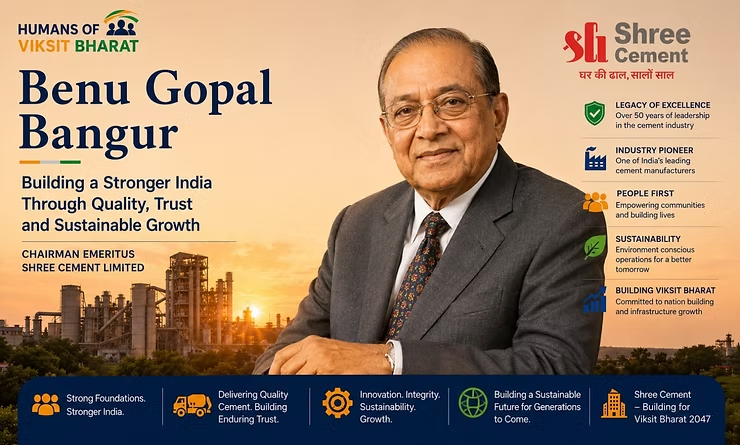
Introduction
India's infrastructure growth story is inseparable from the evolution of its cement industry. Every highway, bridge, metro system, airport, residential township, and industrial corridor depends on the strength and reliability of cement. Among the companies that have significantly contributed to this transformation, Shree Cement Limited stands out as one of India's most respected and efficient cement manufacturers.
Behind the company's remarkable success is the visionary leadership of Benu Gopal Bangur, a prominent member of the renowned Bangur business family. Through strategic planning, operational excellence, and a relentless focus on efficiency, the Bangur family transformed Shree Cement from a regional manufacturer into one of India's largest cement producers. Today, the company is recognized for its low-cost production model, extensive manufacturing network, strong sustainability initiatives, and trusted cement brands.
Founded in 1979 in Beawar, Rajasthan, Shree Cement has expanded from a single manufacturing unit into one of India's top cement producers by installed capacity. The company has also diversified into power generation, green building materials, and sustainable manufacturing while maintaining a strong financial position and nationwide market presence.
The Bangur Family: A Legacy of Entrepreneurship
The Bangur family is one of India's most respected Marwari business families. Their entrepreneurial journey dates back to the late nineteenth century when the family established businesses in trading, finance, textiles, and manufacturing. Over several generations, the Bangur family expanded into multiple industries while earning a reputation for conservative financial management and long-term value creation.
Unlike many business families focused on rapid expansion through debt, the Bangurs became known for disciplined capital allocation, cautious investments, and sustainable growth. These principles later became central to Shree Cement's corporate philosophy.
Following a family business restructuring in the early 1990s, Benu Gopal Bangur assumed control of the Shree Cement business, creating the foundation for the company's future expansion.
Who is Benu Gopal Bangur?
Benu Gopal Bangur is one of India's most influential industrialists and has served as the Chairman of Shree Cement. Born in 1931 into the Bangur family, he graduated from the University of Calcutta and devoted much of his career to building one of India's most successful manufacturing enterprises.
Under his leadership, Shree Cement evolved from a regional cement company into a national brand. Rather than pursuing aggressive acquisitions, Bangur emphasized:
Operational efficiency
Low-cost manufacturing
Technological innovation
Financial discipline
Sustainable long-term growth
These principles helped the company navigate industry cycles while strengthening its competitive position.
The Vision That Changed Shree Cement
Many businesses aim to become the largest. Benu Gopal Bangur instead focused on building one of the most efficient.
His philosophy centered on:
Producing high-quality cement at competitive costs
Investing in energy-efficient technologies
Expanding capacity carefully
Maintaining prudent debt levels
Delivering long-term value for shareholders
This disciplined approach has made Shree Cement one of India's most cost-efficient cement producers.
The Role of Hari Mohan Bangur
A significant chapter in Shree Cement's growth is associated with Hari Mohan Bangur, Benu Gopal Bangur's son.
An IIT Bombay chemical engineering graduate, Hari Mohan Bangur joined the company and introduced a stronger emphasis on technology, engineering excellence, and manufacturing efficiency. His leadership accelerated capacity expansion while preserving the company's reputation for operational excellence.
Some of his notable contributions include:
Faster execution of plant projects
Increased production capacity
Enhanced energy efficiency
Stronger market expansion
Continued focus on cost leadership
Birth of Shree Cement
Shree Cement Limited was incorporated in 1979 in Beawar, Rajasthan, with the objective of serving India's growing infrastructure needs.
At the time, the Indian cement industry faced several challenges:
Capacity shortages
High energy costs
Limited technological adoption
Regulatory constraints
Despite these hurdles, Shree Cement steadily expanded by investing in modern manufacturing practices and improving operational efficiency.
Early Challenges
Like many manufacturing companies, Shree Cement encountered obstacles in its formative years:
Limited Production Capacity
Initial manufacturing volumes were relatively modest compared with larger established competitors.
Infrastructure Constraints
Transport and logistics networks were less developed, increasing distribution costs.
Capital-Intensive Operations
Cement manufacturing requires substantial investment in machinery, kilns, and power systems.
Competitive Pressure
The company competed with long-established players that had stronger market recognition.
Through disciplined management and continuous investment, Shree Cement overcame these challenges and established a strong foundation for growth.
Expansion Strategy
Instead of expanding rapidly into unrelated sectors, Shree Cement concentrated on strengthening its core business.
Its growth strategy included:
Increasing clinker capacity
Adding grinding units
Expanding geographically
Improving logistics
Investing in captive power generation
Enhancing energy efficiency
This focused approach enabled the company to scale sustainably while maintaining profitability.
Timeline of Shree Cement's Growth
Year | Milestone |
1979 | Shree Cement incorporated in Beawar, Rajasthan |
1985 | Commercial production commenced |
1990s | Capacity expansion and modernization |
Early 2000s | Significant operational turnaround and accelerated growth |
2010s | Expansion into eastern, central, and southern India |
2020s | Launch of the Bangur master brand and continued investments in new capacity, including a major plant inauguration in Andhra Pradesh in 2024. |
Corporate Philosophy
Shree Cement's philosophy emphasizes value creation through:
Innovation
Customer satisfaction
Environmental responsibility
Employee development
Operational excellence
Ethical governance
These principles have supported the company's sustained growth and industry reputation.
Why Shree Cement Stands Apart
Several factors distinguish Shree Cement from many competitors:
Low-Cost Production
The company is widely recognized for maintaining one of the industry's most efficient cost structures through optimized operations and energy management.
Strong Distribution Network
Its products are supplied across multiple Indian states through an extensive dealer and distributor network.
Technological Advancement
Shree Cement continually invests in automation, digital systems, and process optimization to improve productivity and quality.
Sustainability Focus
The company emphasizes alternative fuels, waste utilization, renewable energy, and lower environmental impact as part of its long-term sustainability strategy.
Shree Cement's Manufacturing Network Across India
One of the biggest reasons behind Shree Cement's remarkable success is its extensive manufacturing network. Over four decades, the company has expanded from a single production unit in Rajasthan to a pan-India manufacturing footprint, enabling it to efficiently serve customers across northern, eastern, western, central, and southern India.
Today, Shree Cement is among India's top three cement producers, with an installed cement production capacity of approximately 69.30 million tonnes per annum (MTPA) in India and 73 MTPA including overseas operations. The company also has an installed power generation capacity of more than 1,137 MW, including renewable energy sources, helping it maintain operational efficiency and cost competitiveness.
Strategically Located Manufacturing Plants
Shree Cement has established cement plants and grinding units in multiple states to reduce logistics costs and ensure timely product availability. According to the company, its manufacturing network spans numerous facilities across India, supported by an expanding distribution system.
Some of the major operational regions include:
Rajasthan
Chhattisgarh
Uttar Pradesh
Bihar
Jharkhand
Odisha
West Bengal
Haryana
Punjab
Karnataka
Andhra Pradesh
Telangana
This geographical diversification reduces dependence on a single market while improving supply-chain resilience.
Integrated Cement Manufacturing Process
Shree Cement follows a highly integrated manufacturing process designed to maximize efficiency while maintaining product quality.
1. Limestone Mining
The process begins with the extraction of high-grade limestone from captive mines located near manufacturing facilities.
2. Raw Material Preparation
The limestone is blended with clay and corrective materials before being crushed and ground into a fine raw meal.
3. Clinker Production
The raw meal is heated in advanced rotary kilns at temperatures approaching 1,450°C, producing clinker—the primary ingredient used in cement manufacturing.
4. Cement Grinding
The clinker is then ground with gypsum and, depending on the product, supplementary materials such as fly ash or slag to produce different grades of cement.
5. Automated Quality Testing
Every production stage undergoes stringent laboratory testing and process control to ensure compliance with Bureau of Indian Standards (BIS) and internal quality benchmarks.
Technology-Driven Manufacturing
Shree Cement has invested heavily in automation and digital technologies to improve productivity and consistency.
Key initiatives include:
Advanced process control systems
Robotic quality-control processes
Energy-efficient kiln operations
Predictive maintenance
Digital monitoring of plant performance
These investments contribute to lower production costs, reduced downtime, and consistent product quality.
Power Generation: A Competitive Advantage
Power is one of the largest operating costs in cement manufacturing. To address this, Shree Cement has invested in captive power generation and renewable energy.
Its installed power generation capacity exceeds 1 GW, incorporating:
Waste Heat Recovery (WHR)
Solar energy
Wind energy
Other renewable power sources
This strategy lowers dependence on external electricity suppliers while reducing environmental impact.
Evolution of the Bangur Brand
In early 2024, Shree Cement unified its product portfolio under the Bangur master brand. This branding initiative was designed to create a single, recognizable identity across its range of building materials while reflecting changing customer preferences.
Major Cement Products Offered by Shree Cement
The company's portfolio caters to individual home builders, contractors, infrastructure developers, and institutional buyers.
1. Bangur Magna
A premium cement formulated for high-strength concrete applications, suitable for foundations, columns, beams, and slabs.
Applications:
Residential buildings
Commercial projects
Industrial structures
2. Bangur Powermax
Designed for demanding construction requirements, this product emphasizes strength and durability.
Suitable for:
Multi-storey buildings
Bridges
Heavy concrete structures
3. Bangur Rockstrong
Engineered to provide reliable performance and structural integrity, making it a popular choice for general construction.
Ideal for:
Houses
Boundary walls
RCC work
Infrastructure projects
4. Bangur Jungrodhak
A specialized cement formulated to enhance corrosion resistance, particularly in reinforced concrete exposed to challenging environmental conditions.
Common applications include:
Coastal structures
Industrial buildings
Water-retaining structures
5. Bangur Roofon Plus
Designed for roof slabs and reinforced concrete work, with an emphasis on workability and long-term durability.
6. Bangur Total
Marketed with a focus on waterproofing and strength, this product is intended to improve protection against moisture while maintaining structural performance.
7. Bangur Marble
Developed for applications where brightness and finishing quality are important, such as decorative and architectural construction.
Types of Cement Manufactured
Shree Cement produces several categories of cement to meet varied construction needs:
Ordinary Portland Cement (OPC 43 Grade)
Ordinary Portland Cement (OPC 53 Grade)
Portland Pozzolana Cement (PPC)
Portland Slag Cement (PSC)
Composite Cement (CC)
Bulk Cement for infrastructure projects
Each product is designed for specific structural, commercial, or residential applications while adhering to relevant BIS standards.
Serving Diverse Customer Segments
Shree Cement's products support a broad spectrum of construction activities, including:
Individual home construction
Affordable housing
High-rise residential projects
Commercial complexes
Industrial facilities
Roads and highways
Bridges
Dams
Metro rail projects
Precast concrete manufacturing
Its distribution network helps ensure product availability across urban and rural markets alike.
Commitment to Quality
Quality remains a cornerstone of Shree Cement's reputation. The company emphasizes:
Continuous process monitoring
High-quality clinker
Rigorous laboratory testing
Automated quality-control systems
Compliance with BIS specifications
This focus has enabled the company to earn the trust of contractors, engineers, architects, and homeowners across India.
Operational Efficiency as a Growth Driver
Rather than relying solely on scale, Shree Cement has consistently focused on operational excellence through:
Energy-efficient manufacturing
Captive and renewable power
Lean cost structures
Continuous process innovation
Strategic plant locations
Financial Strength: Building a Resilient Business
Shree Cement has earned a reputation for balancing growth with financial discipline. Rather than relying on aggressive expansion funded by excessive borrowing, the company has historically focused on improving operational efficiency, prudent capital allocation, and cost leadership.
This disciplined strategy has enabled it to remain one of India's strongest cement companies through varying market cycles while continuing to invest in new capacity and technology.
Revenue Growth and Business Performance
The company's revenue is primarily generated through:
Cement sales
Clinker sales
Ready-Mix Concrete (RMC)
Power generation
Value-added building materials
In recent years, demand has been supported by:
Government infrastructure spending
Urban housing development
Commercial real estate
Industrial expansion
Rural housing schemes
Despite fluctuations in fuel prices and logistics costs, Shree Cement has consistently emphasized cost optimization and premium products to support profitability.
Cost Leadership: The Core Competitive Advantage
Shree Cement is widely recognized as one of the most cost-efficient cement manufacturers in India.
Its competitive advantage stems from:
Efficient Energy Management
The company continuously improves energy consumption across production facilities.
Captive Power Generation
Significant captive and renewable power capacity reduces dependence on external electricity suppliers.
Modern Manufacturing
Automated plants minimize waste and improve production consistency.
Strategic Plant Locations
Manufacturing facilities are positioned to reduce freight costs and improve regional supply.
Digital Operations
Predictive maintenance, process automation, and data-driven decision-making help improve plant efficiency.
Expanding Beyond Cement
Shree Cement is increasingly positioning itself as a broader building materials company.
Its portfolio now includes:
Cement
Ready-Mix Concrete (RMC)
Premium construction solutions
Digital customer services
Value-added building products
The company has also been rapidly expanding its RMC network to serve infrastructure and urban construction projects.
Sustainability: A Core Business Strategy
Sustainability is integrated into Shree Cement's long-term growth strategy rather than treated as a separate initiative.
The company's environmental priorities include:
Reducing carbon emissions
Increasing renewable energy use
Conserving water
Improving waste management
Enhancing resource efficiency
Promoting circular economy practices
These initiatives align with its broader ESG commitments and long-term resilience goals.
Renewable Energy Leadership
One of the company's most significant achievements has been its increasing use of renewable energy.
Recent company disclosures indicate:
Installed power generation capacity exceeds 1,137 MW, including renewable sources.
Green electricity accounted for more than 65% of electricity consumption in Q1 FY26.
The company continues to expand solar, wind, and waste heat recovery projects.
Water Conservation
Water stewardship is another important pillar of Shree Cement's sustainability strategy.
Key initiatives include:
Rainwater harvesting
Water recycling
Process water reuse
Efficient water management at plants
The company reports maintaining a water-positive status through replenishment and conservation initiatives.
Waste Management and Circular Economy
To reduce dependence on conventional fuels and raw materials, Shree Cement promotes circular economy practices by:
Using alternative fuels
Co-processing industrial waste
Utilizing fly ash and slag in blended cements
Recovering waste heat for energy generation
These measures help lower emissions while improving resource efficiency.
Corporate Social Responsibility (CSR)
Shree Cement's CSR initiatives focus on improving the quality of life in communities around its operations.
Major areas include:
Education
School infrastructure
Scholarships
Digital learning support
Teacher development
Healthcare
Medical camps
Mobile health services
Maternal and child healthcare
Preventive health awareness
Skill Development
Vocational training
Entrepreneurship support
Youth employability programs
Women Empowerment
Self-help groups
Livelihood initiatives
Financial literacy
Community leadership programs
Rural Development
Drinking water
Village infrastructure
Sanitation
Agricultural support
These programs are designed to create long-term social impact in partnership with local communities.
Corporate Governance
Strong governance has been a defining feature of Shree Cement's business philosophy.
The company emphasizes:
Independent board oversight
Transparent financial reporting
Ethical business conduct
Risk management
ESG governance through a dedicated CSR and Sustainability Committee
This governance framework supports long-term stakeholder confidence.
Awards and Recognition
Over the years, Shree Cement has received recognition for its operational excellence and sustainability efforts.
Recent recognitions highlighted by the company include:
Business Today India's Most Sustainable Companies Awards 2025
State-Level Bhamashah Award 2025 from the Government of Rajasthan for contributions to community education
The company has also received certifications and acknowledgments related to quality, environment, and safety across various manufacturing locations.
Future Expansion Plans
Shree Cement continues to pursue measured expansion while maintaining its cost leadership strategy.
According to recent company updates:
Integrated cement projects in Jaitaran (Rajasthan) and Kodla (Karnataka) are progressing.
The company aims to exceed 80 MTPA of cement production capacity by 2028.
Expansion is supported by investments in renewable energy, Ready-Mix Concrete, digital capabilities, and premium products.
Looking Ahead
India's long-term demand for cement is expected to be supported by:
National infrastructure projects
Smart cities
Affordable housing
Industrial corridors
Renewable energy infrastructure
Urbanization
With its strong balance sheet, efficient operations, sustainability focus, and expanding product portfolio, Shree Cement is well positioned to benefit from these long-term trends.
Conclusion
The story of Benu Gopal Bangur and the Bangur family reflects how disciplined leadership, prudent financial management, and a commitment to operational excellence can build an enduring enterprise. Since its incorporation in 1979, Shree Cement Limited has grown from a regional cement manufacturer into one of India's eading building materials companies, known for efficiency, innovation, and sustainability.
The company's success has been driven by a clear strategic vision: expand thoughtfully, invest in modern technology, maintain cost competitiveness, and create long-term value for stakeholders. Under the leadership of Benu Gopal Bangur and Hari Mohan Bangur, Shree Cement has strengthened its manufacturing footprint, diversified its product portfolio, and embraced environmentally responsible practices that align with India's future infrastructure needs.
Looking ahead, continued investments in production capacity, renewable energy, and digital transformation position Shree Cement to remain a key contributor to the country's development. As India advances its infrastructure ambitions, the company is well placed to support that jour


Comments